




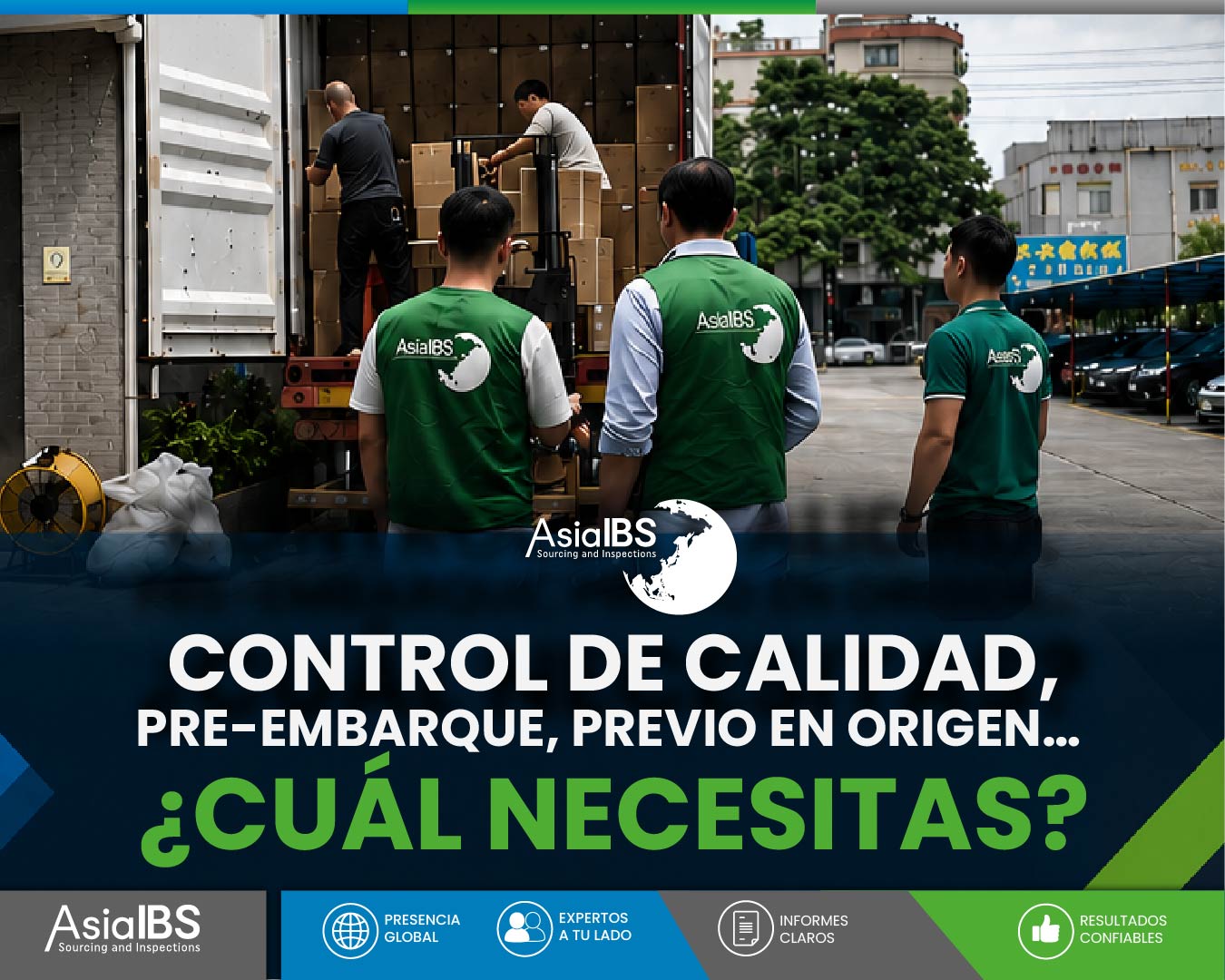
Which Type of Inspection Do You Need? Quality Control, Pre-Shipment Inspection, or Pre-Verification at Origin

In international trade, not all inspections serve the same purpose.
Choosing the wrong type of inspection can leave significant risks uncovered and create problems in quality, logistics, or compliance.
The Quality Control, the Pre-Shipment Inspection, and the Pre-Verification at Origin are distinct processes that operate at different stages of the supply chain.
Knowing which one to apply can make the difference between a safe import… or a costly problem.
Quality Control: supervision during production
The Quality Control is carried out while the product is still being manufactured.
Its purpose is to detect errors, defects, or deviations before production is completed, allowing timely corrections and preventing greater losses.
Benefits:
- Detecting failures before producing large volumes
- Validating materials and processes
- Reducing rework and returns
- Maintaining quality standards
Pre-Shipment Inspection: review before shipping
The Pre-Shipment Inspection takes place once production is finished and the goods are ready to ship.
At this stage, the following is reviewed:
- Final product quality
- Quantities
- Packaging
- Labeling
- Compliance with specifications
It is one of the most widely used inspections to avoid receiving incorrect or defective goods.
Pre-Verification at Origin: validation during loading
The Pre-Verification at Origin takes place during the container loading process.
This inspection verifies:
- That the correct goods are loaded
- Container conditions
- Final quantities
- Cargo distribution and securing
It helps prevent logistics errors, in-transit damage, and discrepancies upon receipt.
Each inspection covers different risks
Many companies believe a single inspection is enough.
However, each stage protects against different risks.
| Type of inspection | Timing | Risk it prevents |
|---|---|---|
| Quality Control | During production | Manufacturing defects |
| Pre-Shipment | Before shipping | Incorrect or defective products |
| Pre-Verification at Origin | During loading | Logistics and shipment errors |
Relying on a single inspection can leave gaps
Depending on just one review can leave critical areas unsupervised.
For example:
- A product may pass quality checks but be loaded incorrectly
- A shipment may leave complete, but with undetected defects
- A production run may start well and drift off course later
The right combination depends on the type of product, the supplier, and the level of risk.
Choosing well changes the outcome
Implementing the right inspection helps to:
- Reduce losses
- Avoid delays
- Minimize claims
- Improve import security
- Protect the company’s reputation
At Asia IBS, we help companies define the most suitable inspection scheme for each international operation.


