




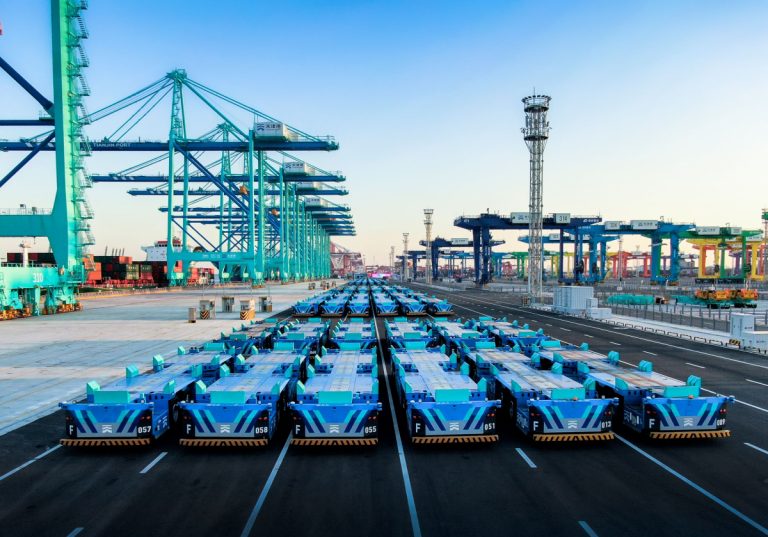

Technology company Huawei will strengthen its collaboration with the Port of Tianjin to build the world’s second automated, smart port, with the goal of achieving zero-carbon, driverless landside facilities at the port terminal in northern China.
Specifically, the aim is for cranes to unload containers from ships and place them onto vehicles at a steady pace through the use of technology, transporting them to designated storage areas without human intervention at any stage of the process. The project also seeks to minimize workplace accidents and improve efficiency through digitalization.
It is worth noting that Terminal C of the Port of Tianjin is the first in the world to implement a smart horizontal transportation management system, controlled through Artificial Intelligence and 5G. It is also a pioneer in deploying L4-level autonomous driving at a port on a commercial, large-scale basis, thanks to the alliance between Tianjin Port Group and tech giant Huawei.
Accordingly, the new joint challenge for both entities is to build a second unit, similar to Terminal C, that is smart, features automated machinery, and runs on green electric power. The goal is for its landside operations to be zero-carbon.
In this context, Huawei’s CTO of Smart Road, Waterway and Port, Yue Kun, noted that “ports are a vital element in maritime transportation, connecting trade and goods markets around the world. Building more efficient smart ports is becoming an increasingly pressing requirement for global supply.”
It is worth mentioning that among the comparative advantages of the smart horizontal transportation system is the ability to plan routes, ensuring efficiency and avoiding collisions or accidents, as well as to schedule movements according to terminal demand. Both Huawei and Tianjin Port Group highlight that container traffic increased 6.9% year-on-year at the automated terminal.
The established work plan includes the construction of new automated terminals, the upgrading of existing traditional terminals, and the comprehensive digital transformation of ports, with 5G networks, Cloud services, Artificial Intelligence, satellite connectivity, and smart automation devices considered essential elements of this process.
Source: Portal Portuario


