




Germany Distances Itself From Its Main Trading Partner. The Economy Minister Wants to Make Doing Business With China Less Attractive.

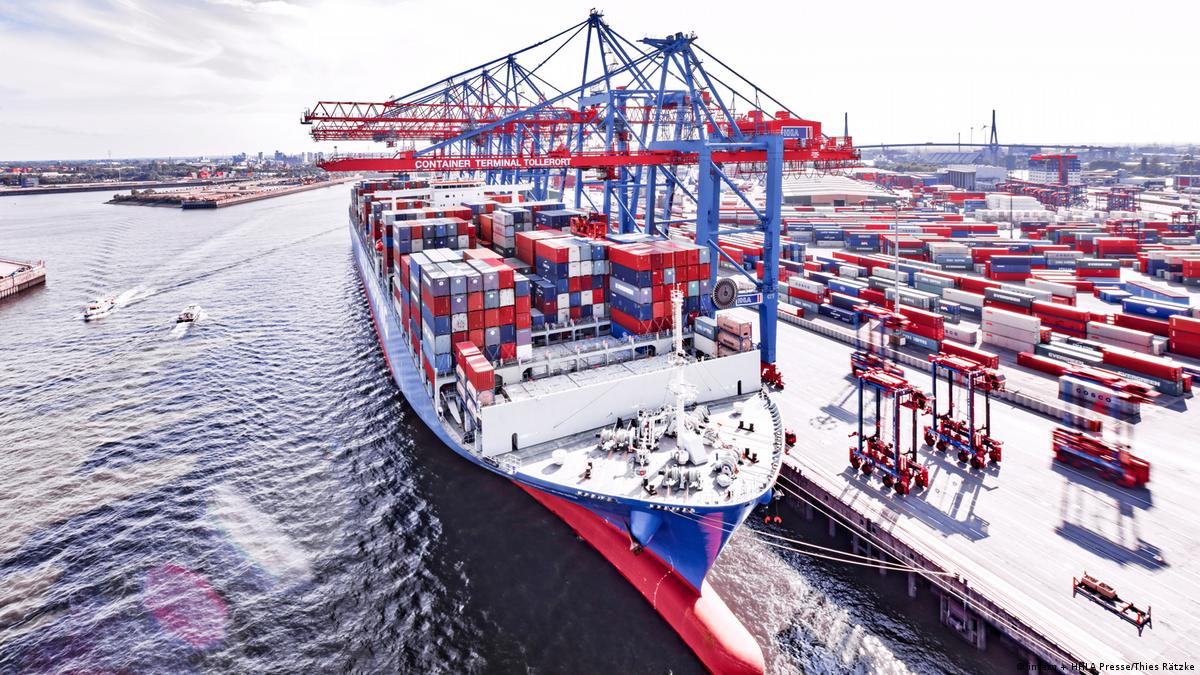
The port of Hamburg is considered Germany’s gateway to the world, and above all a gateway to China. The Asian giant is the top customer of this northern port, which received more than 1.3 million containers from China in the first six months of 2022 alone.
Now, the Chinese shipping line COSCO, the largest in the world, intends to take a 35 percent stake in the Tollerort container terminal, a move that the German transport and logistics company Hamburger Hafen und Logistik AG (HHLA) also supports.
However, according to the Reuters news agency, the government in Berlin has doubts about a COSCO investment and has not yet given the green light to the stake.
With Russia’s invasion of Ukraine, it became clear that dependence on Russian gas is a weak point for Germany. As a result, Berlin is now reassessing its relationship with China: how should it deal with an autocracy that has been Germany’s main trading partner for years? How should it deal with a country that the European Union describes as a partner, competitor and strategic rival all at once?
No more state guarantees
As early as late May, Germany’s Economy Minister, Robert Habeck, denied Volkswagen guarantees for its investments in China. This came as a shock to German companies, which for decades had received state guarantees for their investment and export business.
Tim Rühling, of the German Council on Foreign Relations (DGAP), believes the German government no longer wants to keep incentivizing German companies’ business in China, so in the near future, companies wishing to invest in the Asian giant will no longer be able to count on state support or guarantees.
For now, most companies continue to trade with China: according to a study by the German Economic Institute (IW), in the first half of 2022 the German economy invested close to ten billion euros in China, a record amount.
An overrated independence?
Jörg Wuttke, president of the EU Chamber of Commerce in China, confirmed in an interview with DW a September study by the Rhodium Group, according to which some ten large European companies are responsible for 80 percent of European investment in the Asian country. In Wuttke’s view, the remaining European companies with a presence in China are considering diversifying and investing in other countries as well.
While the expert also confirms Germany’s dependence on imports of rare earths, semi-finished products for the pharmaceutical industry and for photovoltaic installations, he disagrees with comparing gas imports from Russia to imports of toys, furniture, clothing, footwear and sports equipment from China. According to Wuttke, 90 percent of these products can easily be replicated in another country.
For his part, IW expert Jürgen Matthes explains that around three percent of jobs in Germany depend on exports to China. “We are talking about more than one million jobs. While that is a significant number, it has to be seen in relation to the more than 45 million people employed in the country,” he told DW. For Matthes, at the macroeconomic level, dependence on China as an export market is relevant, but not as great as is often claimed in the media.
Source: DW


