




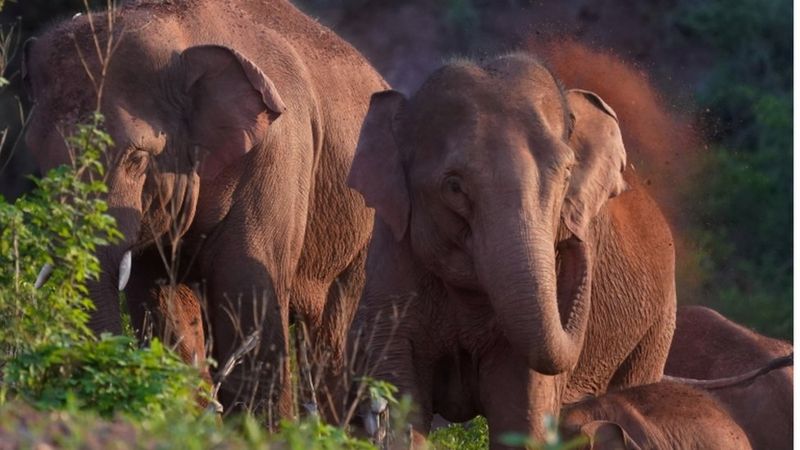
The Mysteries of the Unexpected, Mammoth Journey of a Herd of Elephants in China

Elephants are by nature fiercely intelligent, and the experts who study them day in and day out already know a great deal about them. However, a herd in China has left scientists around the world completely stunned.
It is not unusual for elephants to move short distances. But this herd has been roaming across China for more than a year.
The elephants have traveled nearly 500 km from their original habitat, a gigantic trek.
They are believed to have begun their journey last spring from the Xishuangbanna National Nature Reserve in the country’s southwest, near the border with Myanmar and Laos.
They began moving north and, in recent months, have turned up in several villages, towns, and cities.

They have been seen knocking down doors, raiding shops, “stealing” food, playing in the mud, bathing in a canal, and taking a nap in the middle of a forest.
They have also been seen flattening crops in their path and prowling around people’s homes; on one occasion, they were even seen lining up in a courtyard to drink water, successfully opening a tap with their trunks.
They are believed to have started moving south again and were last seen in Shijie, a town near the city of Yuxi, in Yunnan province.
It is unclear whether they are on their way back, or why they embarked on this journey, which is already the longest known elephant trek in that country. Nor is it known what will come next.
Baffled scientists
“The truth is that nobody knows,” Joshua Plotnik, assistant professor of elephant psychology at Hunter College, City University of New York, told the BBC when asked about the causes of this movement.
“It is almost certainly related to the need for resources (food, water, shelter), and this would make sense given that in most places where Asian elephants live in the wild there is an increase in human disturbance leading to habitat fragmentation and loss and to shrinking resources,” he adds.
Plotnik added that the movement could have something to do with the group’s social dynamics.
Elephants are matriarchal, and the oldest and wisest female leads the group of grandmothers, mothers, and aunts along with their sons and daughters.
After puberty, the males break away and travel alone or join up with other males for a brief period. They only reunite with the females temporarily to mate before leaving again.
However, this herd formed as a group of 16 or 17 elephants, including three males.
Two males split off from the group a month later, and the other wandered off earlier this month.
“This is not unusual, but I am surprised he stayed so long. It was probably because they were in unfamiliar territory. When I saw them enter a town or village, they were moving very close together, which is a sign of stress,” said Ahimsa Campos-Arceiz, professor and principal investigator at the Xishuangbanna Tropical Botanical Garden.
Elephants behave more like humans than other mammals do and experience a range of emotions, such as the joy of birth, the grief of death, and anxiety in unfamiliar territory.
Researchers were also surprised when two of the female elephants gave birth during the journey.
“Elephants are creatures of habit and very routine-driven; it is unusual for them to move to new areas when they are about to give birth—they try to find the safest place they can,” Lisa Olivier of Game Rangers International, a wildlife conservation organization based in Zambia, told the BBC.
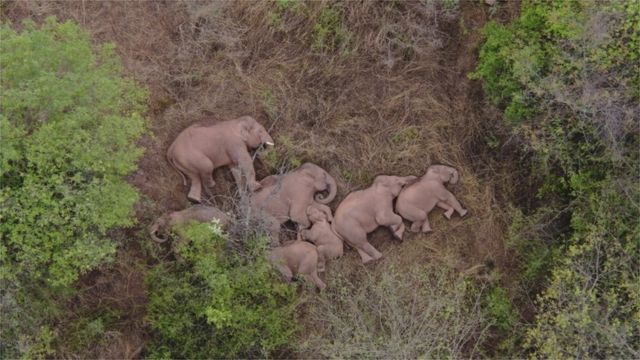
Olivier says the famous images of the elephants sleeping together are also unusual.
“Normally the babies sleep on the ground and the bigger ones lean against a tree or a termite mound. Because they are so big, if there is any kind of threat it takes them too long to get up, and lying down puts a lot of pressure on their heart and lungs,” she said.
“The fact that they were lying down suggests they were exhausted, totally wiped out—everything must be so new to them. Much of their communication is infrasonic sound, the vibration of their feet, but in the towns and cities they are hearing the sounds of vehicles,” she added.
Smaller habitats
Scientists unanimously agree that this is not a migration, because the animals are not following a fixed route.
However, China is one of the few places in the world where the elephant population is growing thanks to extensive conservation efforts.
The authorities have cracked down on poaching and, as a result, the wild elephant population in Yunnan province has grown from 193 in the 1990s to about 300 today.
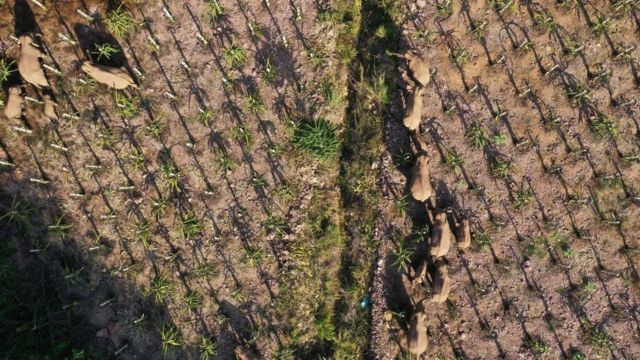
But growing urbanization and deforestation have shrunk the elephants’ habitats. That is why experts believe they may be looking for a new home with better access to food.
These giants of the jungle are impressive eating machines, slaves to their stomachs, and so they spend much of their lives searching for the 150 to 200 kg of food they need every day.
Aerial tracking
Experts are pleased that the elephants’ unusual journey has not led to dangerous confrontations with humans. And there are other upsides.
The drones deployed by the authorities to monitor the elephants have given researchers a wealth of high-quality information without disturbing the animals. And they have offered an excited public unforgettable photographs.
Olivier also highlights the cooperation among the government, local authorities, and conservation projects to protect the herd.
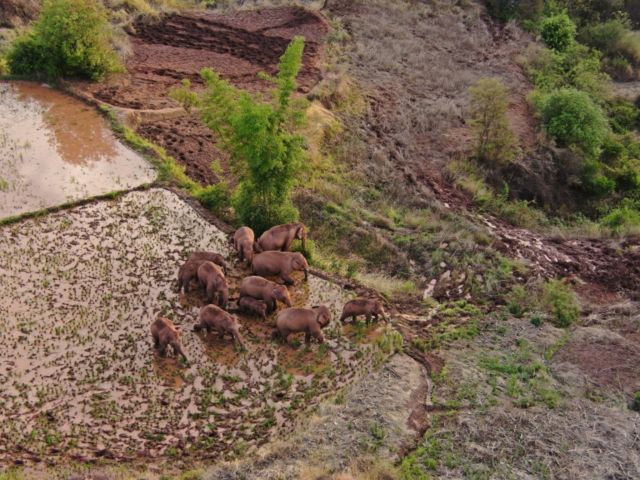
In recent months, officials have been laying out food bait and blocking roads with trucks to redirect the elephants to a safe place.
“I am pleased that the approach is not very intrusive. A very common mistake is trying to tell elephants what to do. Elephants did not evolve to be told what to do. When we try to tell them what to do while they are traveling long distances, we can trigger a great deal of aggressive behavior,” said Campos-Arceiz.
Chinese media have been following the group of elephants daily. And the herd has become a social media sensation.
All the attention generated by this trek has raised awareness of and sensitivity to the plight of endangered elephants in the country, and the worldwide interest is likely to have far-reaching effects.
“This attention and exposure will help conservation around the world,” according to Olivier.


