




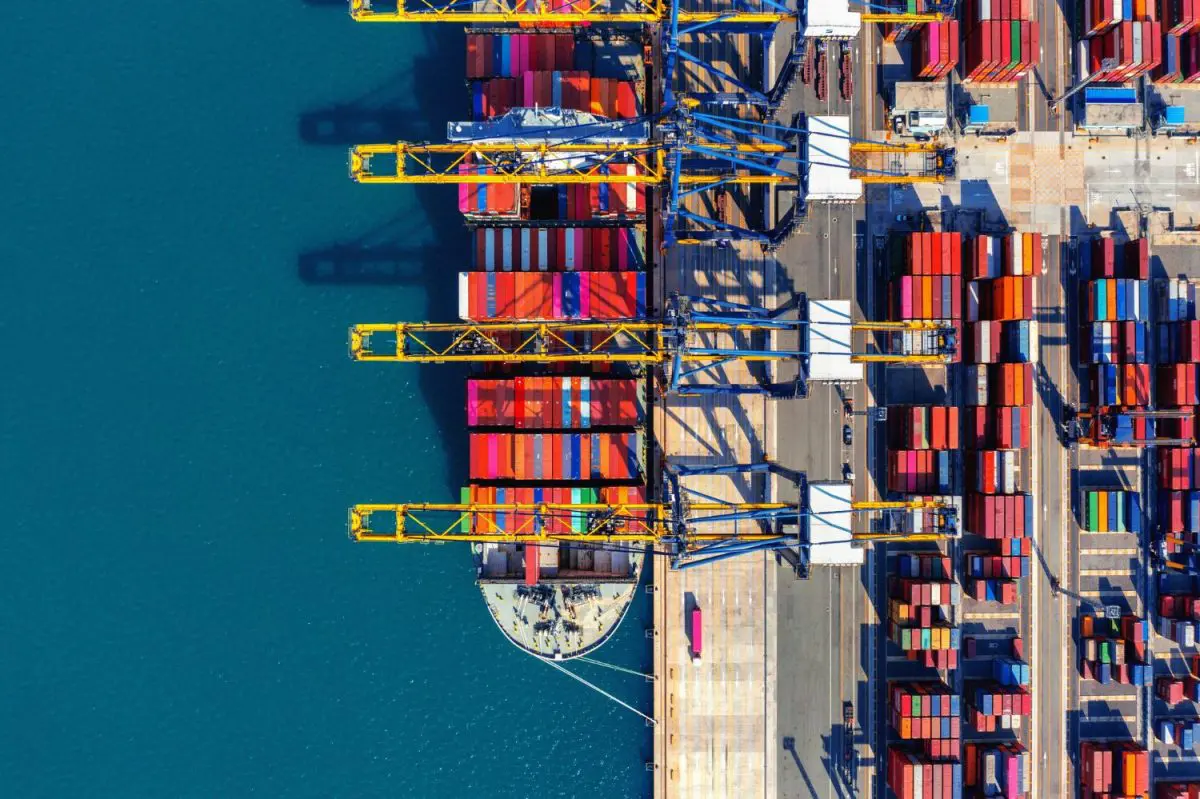

The pandemic, the war, and the downturn in international trade disrupted the maritime cycle in terms of freight rates
Bottlenecks in supply chains were also generated by greater port congestion, limited port availability, and the high concentration of the shipping industry.
Several additional factors contributed to rising costs in maritime transportation.
- The disruptions in maritime supply chains began in 2020 due to events such as the pandemic and the Russia-Ukraine War; 80% of global trade volume moves by sea.
According to the document International Trade Outlook for Latin America and the Caribbean 2022, prepared by the Economic Commission for Latin America and the Caribbean (ECLAC), the main consequences included:
- Shortage of imported final goods for consumption.
- Shortage of imported inputs and capital goods for production.
- Disruptions to the balance of logistics markets.
- Loss of shipment reliability.
- Delays, congestion, and the inability to plan the logistics chain.
- Higher inflation due to increased transportation costs.
FEATURED ARTICLE: Reverse logistics: achieve strategic management of your returnsREAD ARTICLE
The United Nations Conference on Trade and Development (UNCTAD, 2021) estimated that if freight rates remained at their August 2022 levels through the end of 2023, consumer prices would rise 1.5% and import prices 10.6%.
“The impact of rising costs increases gradually until reaching its peak in month 12, reversing six months later,” the ECLAC document states.
You may be interested in: CANACAR warns of rising supply costs in its Economic Agenda for Freight Trucking
Lack of Reliability in Vessel Arrivals
An additional factor affecting the distribution of goods worldwide was the lack of certainty about the punctuality of vessel arrivals.
Indeed, the Russia-Ukraine War made areas of the Black Sea and the Sea of Azov dangerous due to missile attacks, as well as the detention of vessels.
On top of this, there was vessel congestion with longer shipping and receiving times for goods, as well as labor shortages at ports and a scarcity of ground transportation in Europe.
Congestion at ports on the U.S. East Coast ranged from 5 to 21 days in 2022, and from 5 to 12 days on the West Coast.
In 2022, China’s “Zero Covid” policy contributed to a new imbalance with the two-month lockdown in Shanghai during April and May.
Learn more: The Port of Shanghai reopens. Will it be the end of the container crisis?
Rising Maritime Transportation Costs
The document detailed an increase in the price of the fuel used in maritime transportation due to the Russia-Ukraine war.
“Prices for very low sulfur fuel oil and intermediate fuel oil (380) went from 669 dollars and 526 dollars per metric ton, respectively, in January 2022, to 1,016 dollars and 749 dollars per metric ton, respectively, just days after the start of the conflict.”
As for the transportation cost of exports to the United States, it grew steadily: the value in June 2022 was four times higher than in January 2019.
In the case of imports from Asia, in 2022 it was 4.3 times higher than in January 2019.
Find out more: Inflation and rising rates: how should companies prepare?
What Is the Maritime Cycle?
The ECLAC report explains that “the demand for transportation is linked to the economic cycle or general business cycle. That demand, and its relationship to supply and its effects on the final price (the freight rate), is closely tied to the so-called maritime cycle.”
The maritime cycle is a temporal sequence of adjustments seeking balance between the supply of and demand for maritime services.
For a time, the price sits above equilibrium, which causes the quantity in the following period to be above equilibrium.
This causes the cost to fall below the equilibrium level: “fleet expansion (shipping capacity) will halt and, when facing exogenous demand growth, the delayed reaction of supply will push the price above the equilibrium level, and so on.”
Source: The Logistics World


