





At the end of last year, port congestion caused disruptions in global supply chains, which meant, for example, that many retailers ran out of stock during Black Friday and Christmas, the peak sales season. Advancing automation processes and port intelligence innovation in China could put an end to this problem.
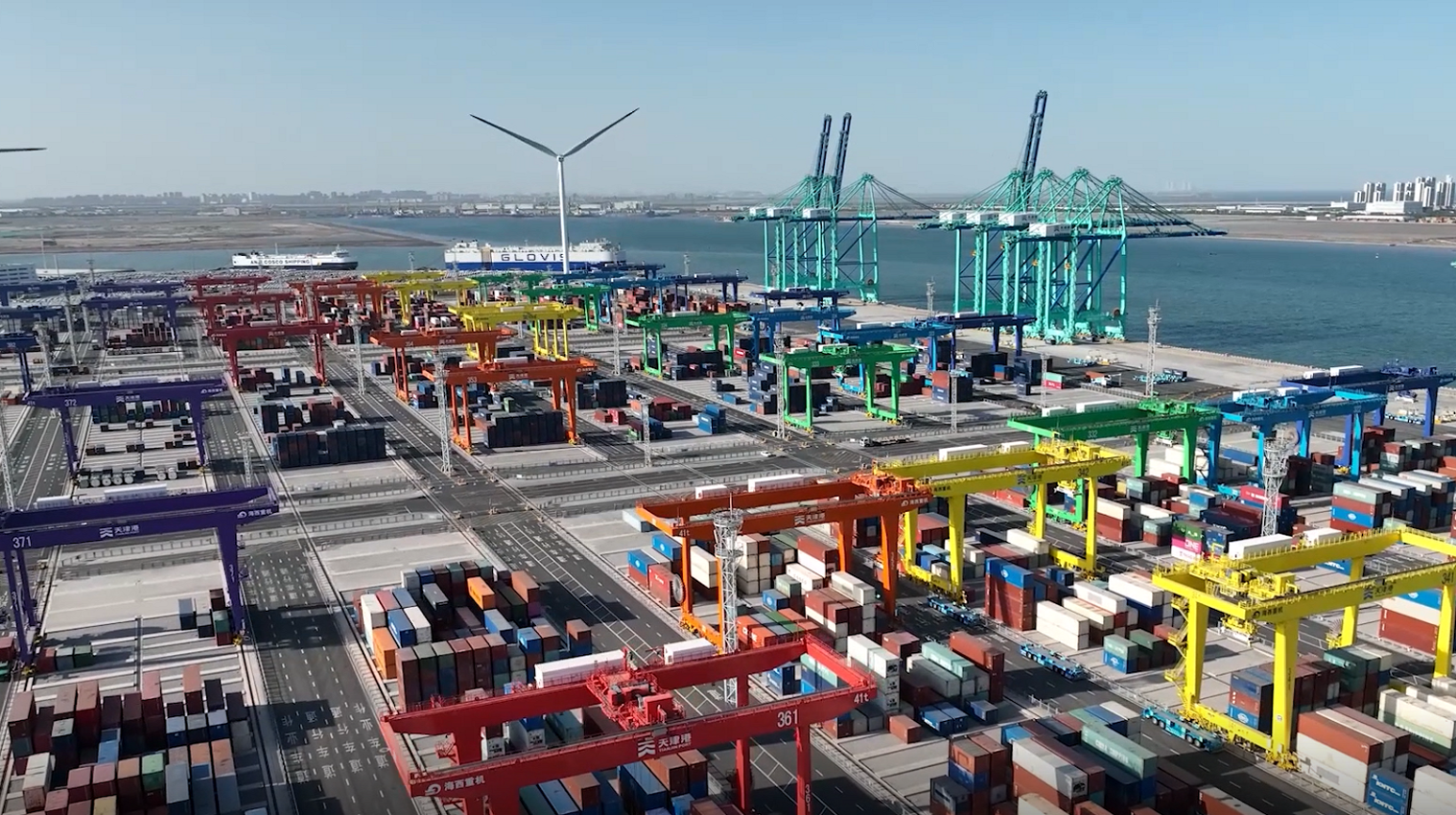
In this regard, at the visitors’ platform of the container terminal in Section C of the port of Tianjin, container cranes operate automatically and unmanned electric container trucks move autonomously. At the port, remotely controlled quay cranes pick up loaded containers from the vessels with maximum stability and load them onto unmanned electric container trucks. Guided by the BeiDou satellite navigation system, the container trucks head to the automatic locking/unlocking stations following the optimal driving route calculated in real time to unlock the containers, and then proceed to the yard where they are stored, completing this entire process in a single run.
This smart terminal was built by Tianjin Port Group (TPG), together with Huawei and other partners, with the aim of creating a smart, green port. This challenging project was made possible by one of Huawei’s innovative applications, the new intelligent horizontal transport system, fully developed with Artificial Intelligence, which has pioneered innovation worldwide. In doing so, it has achieved several global milestones, such as: the large-scale commercial use of driverless ultra-L4, the world’s first ‘5G+BeiDou’ integration of ubiquitous intelligence, and the world’s first self-sufficient operation running on green electricity with zero carbon emissions. This system provides a model for other parts of the world to build low-carbon smart ports.
Energy efficiency
The digitalization and intelligent transformation of the port have delivered major tangible benefits. Previously, transporting containers within ports required a large number of container trucks and the use of drivers, which drove up costs. For example, the port of Tianjin currently has 76 container trucks. To ensure 24/7 operations, each container truck needs three drivers working three shifts a day. That means a total of 210 drivers are required. In addition, driving fixed routes in three shifts takes a heavy physical toll on truck drivers, and this fatigue poses an obvious safety risk. Now, each container consumes 20% less energy and the cranes are 20% more efficient on average, with each crane handling an average of 39 containers per hour.
The port of Tianjin is one of the most technologically advanced in China and a vital hub for the ‘One Belt One Road’ initiative (a global infrastructure development and international cooperation strategy driven by China). It has a 300,000-ton-class berth with a channel depth of -22 meters. It features 192 berths of various types and 128 berths above the 10,000-ton class. At the end of 2021, the port’s cargo throughput reached 435 million tons, ranking ninth in the world, while its container throughput exceeded 18.35 million TEU, ranking eighth globally.
Source: Naucher

