




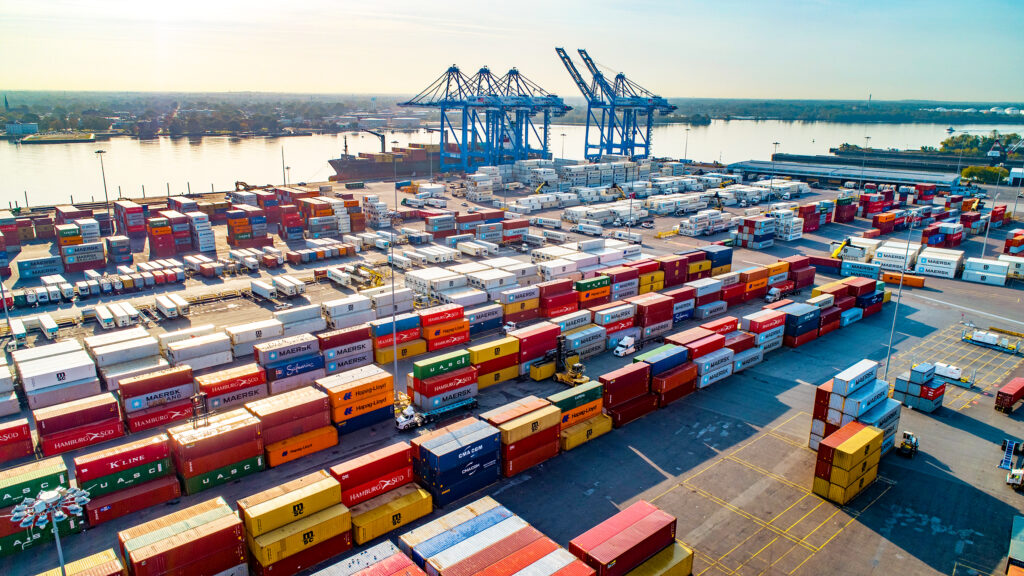

There are strike threats in trucking and on the railroads in the United States, which come on top of exhaustive controls in China that are driving up port congestion.
In the United States, the West Coast ports once again — and now the East Coast ports as well — are beginning to become saturated, according to Splash 247. There is great nervousness among longshoremen and West Coast companies over the state of the supply chain.
Anchorages are filling up with container ships at the East Coast (USEC) and Gulf ports, and vessel queues are longer than on the West Coast (USWC), notes FreightWaves.
The U.S. Chamber of Commerce asked President Joe Biden to help resolve this dispute between the Class I freight rail operators and the sector’s 12 unions, and to create a Presidential Emergency Board made up of members of the National Academy of Arbitrators. If this is not done before July 18, there could be a work stoppage affecting 115,000 workers; if it is carried out, there are 30 days to issue recommendations, and during that time and the following 30 days the parties cannot strike or lock out.
Despite these times, this Wednesday, July 13, some truckers are on strike in California over the new AB5 law, which will reclassify independent contractors to be considered employees.
This does not come at a good time, especially during peak season, and congestion is building at Los Angeles and Long Beach, with some import containers having to wait more than 9 days.
China adds to it with lockdowns
Lockdowns in China have also generated port congestion. Shanghai was closed for two months in early 2022 and is now conducting mass testing in 16 districts over a new strain; in Guangzhou mass testing is also underway; in Wugang a new lockdown was discussed; and in Lanzhou, a lockdown has already been imposed on residents.
This is why there is concern about congestion, longer berthing times and overload at China’s ports, compounded by poor weather conditions marked by typhoons, which have affected Ningbo, Shenzhen and Hong Kong.
Source: Portal Fruticola.


