




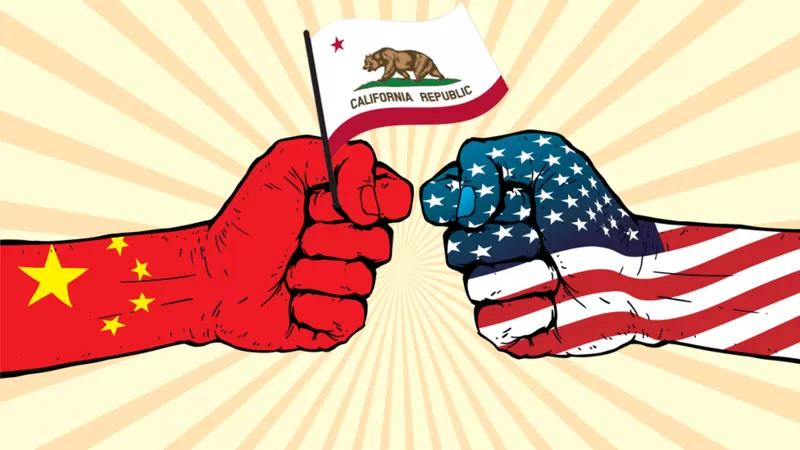
“The relationship between California and China is the biggest diplomatic experiment between superpowers”

The growing commercial, military and political rivalry between the United States and China is having an effect on California, which for decades was the link between the two superpowers.
China and the state of California, said to be the world’s fifth-largest economy, have a relationship that has been forged over more than 150 years through immigration, real estate investment and entertainment.
From 2008 to 2018, the relationship between the two strengthened, but it slowed with the arrival in power of Donald Trump, who questioned his country’s supposed trade disadvantage vis-à-vis China.
The trade war, reflected in the imposition of new tariffs, affected California, which lost independence in decision-making. Policy toward China was once again dictated from the capital, Washington D.C., thousands of kilometers away.
The arrival of Joe Biden has eased tensions, but the rivalry remains. The United States believes China wants to challenge its global leadership; Beijing, for its part, questions American global hegemony.
And California, despite the restrictions of recent years, remains the best place to observe the encounter between the two powers.
“The relationship between California and China is the biggest diplomatic experiment between superpowers”, says Matt Sheehan, a Political Science graduate of Stanford University and author of A Transpacific Experiment: How China and California Collaborate and Compete for Our Future.
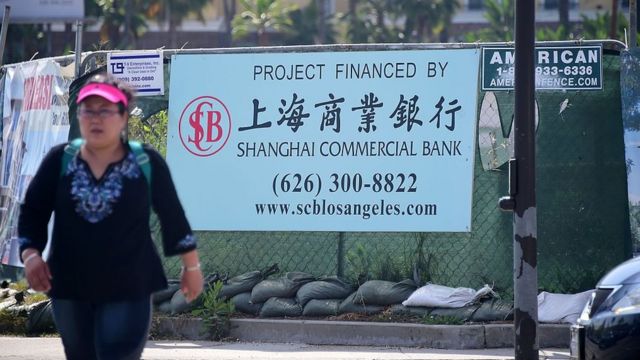
At BBC Mundo we spoke with Sheehan, born and raised in California, who studied this unique transpacific relationship after living in China for nearly a decade.
Why do you say there is a diplomatic experiment between California and China, and that it is the biggest between the superpowers?
For a long time, the relationship between the US and China was very distant. It was high-level leaders in Washington D.C. and Beijing talking to each other.
Ordinary people did not always interact with each other, Chinese companies were not in the United States, and American movies were not shown in China.
But over the past ten years, suddenly, there were hundreds of Chinese students at American universities, much more immigration, and major investment in technology companies and real estate.
And California was at the forefront of each of these trends, becoming the stage for this interesting experiment as two powerful superpowers meet at ground level.

Does California function as an independent country, separate from Washington, in its relationship with China? How would you describe that relationship, and how does it differ from the one between China and the United States?
For a long time, California operated fairly independently of Washington D.C. and the rest of the US government.
Between 2008 and 2018, there was no US national policy on how to treat Chinese students at American universities. There was no national policy, or it came very late, around Chinese investment.
So university presidents in California or, for example, Apple CEO Tim Cook, became the most important people negotiating with China.
Starting in 2018, Washington began to reclaim its power over local governments’, companies’ and universities’ negotiations with China.
California mayors can no longer invite Chinese investors to build factories in their communities, nor can Chinese investors simply buy up new California companies.
There is a kind of tug-of-war between the local leaders who were long at the forefront of the negotiations and Washington.
 GettyChinese university students in California
2021 data
- 1st placeCalifornia tops the ranking of states where the most foreign students choose to study.
- 45%of all international students at California universities (approximately 132,000) are Chinese.
Source: OpenDoors report on international educational exchange
Who is winning that battle between Washington and California?
The federal government is winning this battle for now. Although there is still a lot of power, activity and decision-making in California.
The federal government has set some strict limits on Chinese investment and on how American and Chinese companies can interact with each other.
The federal government has also tried to limit many research partnerships between American and Chinese scientists, but those relationships remain very strong. There is still a lot of collaborative research.
How did China shape California’s life and economy? Does it happen in the opposite direction as well?
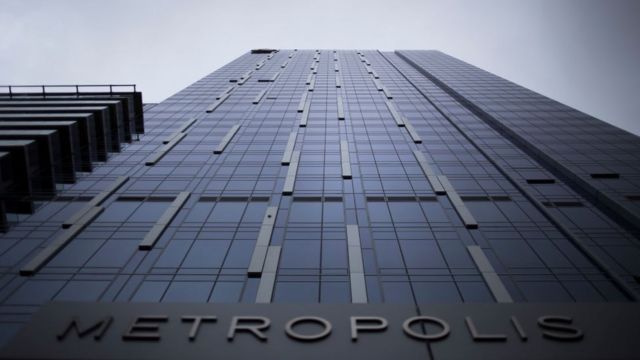
The Chinese community and Chinese investment have reshaped the look of California’s largest cities; they have changed the state’s physical geography to a great extent.
They have built new skyscrapers, and because of them housing prices have also risen.
They also contributed a lot of money to the state’s universities and brought many people from a different culture, driving change.
They reshaped Hollywood and Silicon Valley.
GettyThe Transpacific Experiment is a living laboratory for a new generation of on-the-ground superpower diplomacy”Matt Sheehan
Author of “A Transpacific Experiment”
But California also had a big impact on China in culture and technology.
Hollywood is the center of film culture in the country, and for a long time American movies dominated screens in China. That showed the Chinese what blockbusters looked like, and showed Chinese tech companies what a global technology company looked like.
And people in China greatly admire California’s spirit of innovation and creativity.
California has driven change in many respects in terms of soft power.
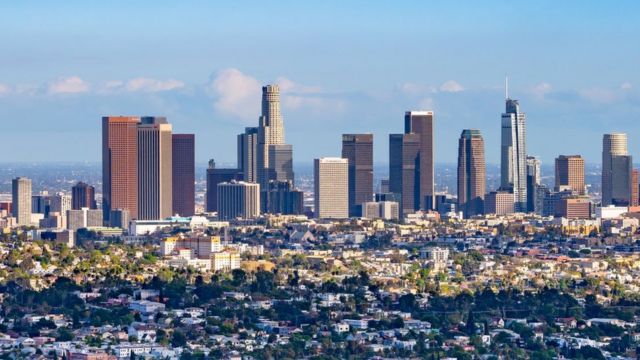
And why California specifically and not another US state?
It is a perfect storm of factors.
There has been a long-standing Chinese community in California since 1850. When Chinese people wanted to move to the United States, they tended to go where immigrants already were.
They tend to buy property in communities that are Chinese, or work through their investment firms, which can speak Chinese.GettyInvestment from 1990 to 2000
- US$36.79 billionis the direct investment in industries from China into California.
- US$55.07 billionis the direct investment in industries from California into China.
Source: The US-China Investment Project. The National Committee on U.S.-China Relations and Rhodium Group (RHG)
Also, California has a lot of what the Chinese, Chinese governments and Chinese companies want.
Chinese people want clean air to breathe, good universities for their children and a Chinese community around them.
The Chinese government wants an economy that is innovative; it can learn a lot from Silicon Valley and Hollywood.
And Chinese companies want to invest in cutting-edge technology and partner with the best film studios in the world.
Who benefits more?
Both China and California. I think if you are looking for a loser, it is the US federal government, because it lost power and control over the interactions for a long time.
Many California companies reap short-term benefits while pursuing longer-term ones.
If there is a sale of a company to China for US$50 million, that is a big gain for an individual or a small company. Meanwhile, what China is really doing is acquiring technology and know-how to learn how to build many other companies worth much more than US$50 million.
You could see an imbalance there, but it really depends on whether we are talking about universities or companies; it is a bit of a mix.
Author of "A Transpacific Experiment"
How did Donald Trump’s administration hurt or benefit the California-China relationship?
The Trump administration returned power to Washington D.C. They set new limits on Chinese investment in tech companies.
In the past, it was the company’s decision whether to accept investment or sell itself to Chinese investors.
Before, universities let in as many Chinese students as they wanted. The last administration made it harder for many of them to obtain visas or remain in the country after graduating.
In each of these areas, Trump returned power to Washington D.C. But the transpacific experiment did not turn into a cold war. Trump helped make the relationship look like a rivalry, and that can change the game in many areas.
GettyTech sector
In 2018, venture capital investment between China and the US hit a record. Most of it in California.
- US$19.44 billionwas invested by the US in China.
- US$4.59 billionwas invested by China in the US.
- *Tech sectors where the two countries invest the most money: biotechnology, Artificial Intelligence and blockchain.
Source: The US-China Investment Project. The National Committee on U.S.-China Relations and Rhodium Group (RHG)
Many people in Washington D.C., both Democrats and Republicans, believed the relationship needed rebalancing, curbing certain aspects of investment.
So Trump accelerated things and made them more erratic. The former president would move the relationship (with China) in one direction, but one day they were best friends and the next day worst enemies. And that is not good.
However, the long-term shift was happening and continues under Joe Biden, though in a more predictable and reasonable way.
Did the transpacific experiment change with the pandemic?
The pandemic has clearly slowed everything down. There are not as many new immigrants or tourists, nor as much business investment. Progress has been frozen.
But there are also many seeds planted during the transpacific experiment that are slowly growing and maturing.
Thousands of Chinese students have graduated from American universities and many are working at local companies.
Many children who were born in China and came to the United States for high school are now bilingual people contributing greatly to the investments that China or Chinese companies made in the US.
What is the future of this bilateral relationship between California and China?
They have adapted to a new normal, and now everyone is trying to figure out how to move forward.
From 2008 to 2018 there was a lot of activity, new companies and relationships. Then we had two or three years in which everything was so erratic that no one could start anything new.
Now, things are much more closed off due to covid and the US-China relationship itself, although it is becoming somewhat more predictable.
We will begin to see activity in some areas, and people doing new things and creating companies, but within a more limited space than before.
Source: BBC Mundo

