




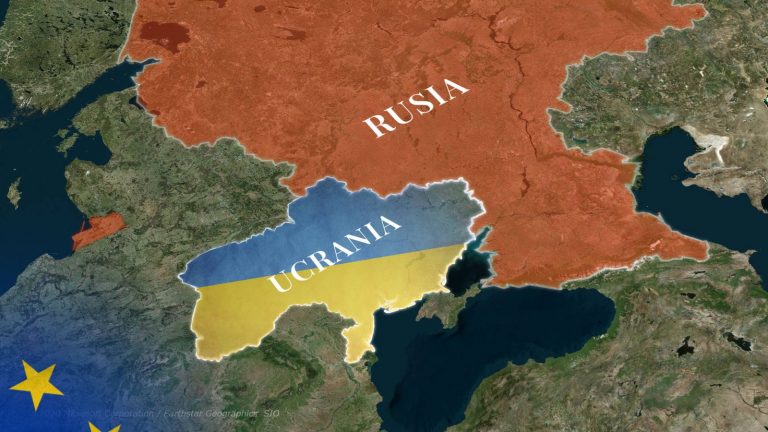

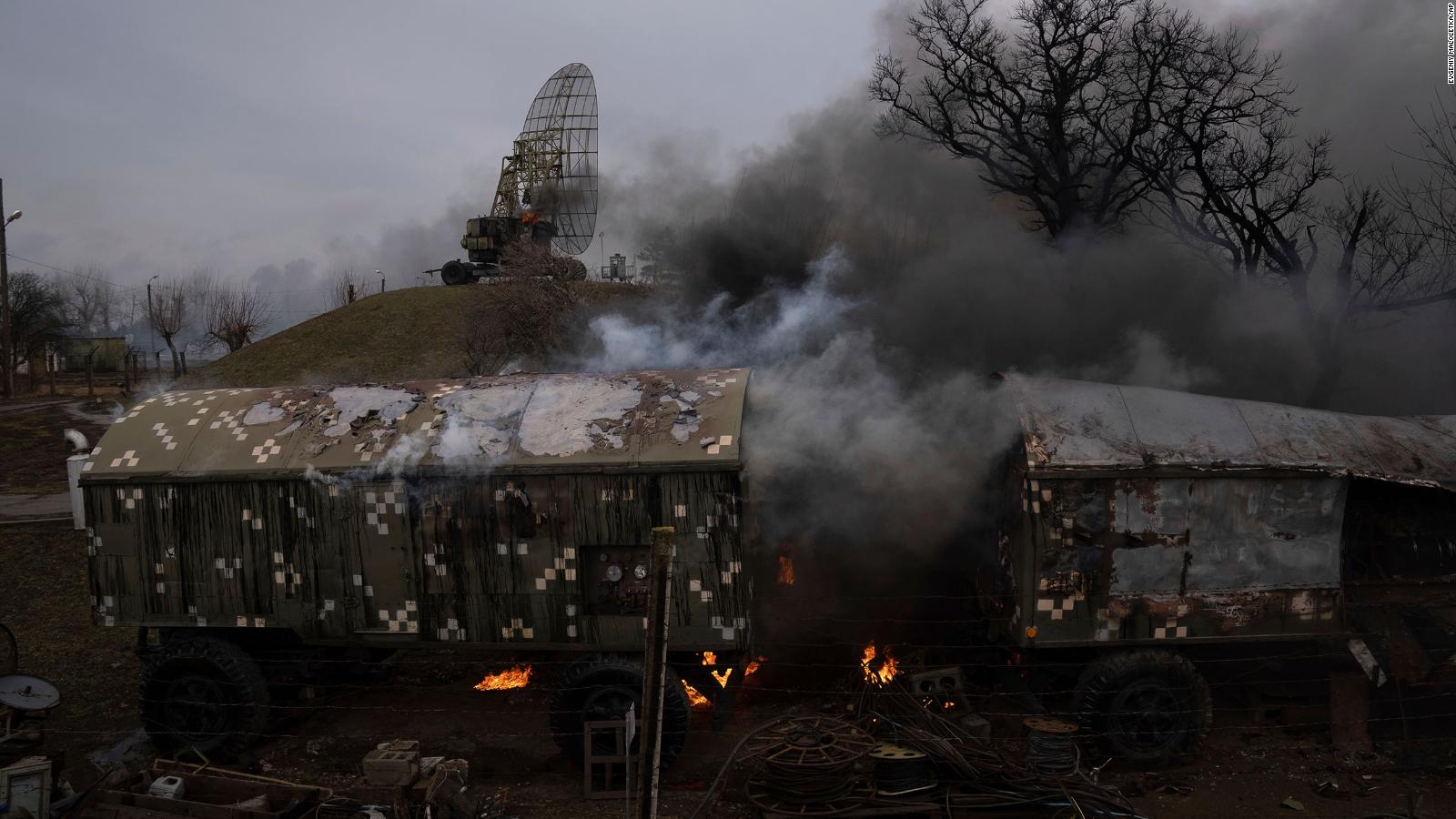
As Russian missiles flew across the Ukrainian sky on Thursday and world leaders denounced an invasion spreading across the country, China refused to roundly condemn Russia’s action and appeared to blame the United States and its allies.
Beijing finds itself in a complex position as Russia’s invasion of its neighbor intensifies, needing to balance a close strategic partnership with Moscow against its seemingly contradictory policy of supporting state sovereignty.
A Chinese government official on Thursday dodged questions about whether it would condemn Russia’s actions or consider them an “invasion.”
Instead, China’s Vice Foreign Minister Hua Chunying, who repeated solemn phrases about seeking peace through dialogue and said the situation “was not what we would hope to see,” was quick to point the finger at the US, suggesting that Washington was “guilty” of “fanning the flames,” referring to American warnings in recent weeks about an imminent invasion.
“China has taken a responsible attitude and persuaded all parties not to escalate tensions or incite war… Those who follow the United States’ lead in fanning the flames and then blame others are truly irresponsible,” she said.
The remarks echoed those made a day before the invasion, when Hua blamed the crisis on “NATO’s eastward expansion to Russia’s doorstep.”
“Did you ever think about the consequences of pushing a great country against the wall?” she said.
Hua’s presence at the briefing on both days was itself unusual, as the veteran spokesperson had not taken the podium at such briefings since being promoted to vice foreign minister in October.
Her remarks were widely circulated on China’s official state media and social media platforms, where conversation about Ukraine dominated coverage and discussion.
‘War is not funny’
But while state media reflected the government’s official line, the top trending topics on Weibo, China’s Twitter-like platform, included a speech by Russian President Vladimir Putin with more than 360 million views, as well as others about how Ukrainian citizens were reacting, such as a post about people lining up to donate blood with 62 million views.
The topic “Ukraine’s president says Western countries have completely given up on Ukraine” topped the morning list, racking up more than a billion views over the course of the day and tens of thousands of comments.
Many of those comments on the highly moderated platform mocked Ukraine and its president Volodymyr Zelensky for being “pro-Western” and applauded Russia and Putin.
But others pushed back: “War is nothing to laugh about,” wrote one user, whose post received more than 60,000 likes. “It makes me physically sick to see all the jokes about the war.”
Elsewhere online, the homepages of China’s leading state media outlets took a measured approach, citing statements and news from both the Ukrainian and Russian sides while focusing on the sanctions imposed by other countries against Russia.
The Communist Party’s mouthpiece, People’s Daily, highlighted comments from China’s Foreign Ministry pointing to how the United States has been “escalating tensions and hyping up war.”
A glimpse of the kind of guidance state media may receive emerged on Tuesday, when what appeared to be an internal memo from Chinese state outlet Beijing News ordering its employees not to publish news reports that were “negative toward Russia or pro-Western” was mistakenly posted on the outlet’s official social media account.
The post, which was quickly deleted, also instructed employees to “filter and publish appropriate comments.” Beijing News, controlled by the Beijing government, declined CNN’s request for comment on the incident.
A relationship ‘without limits’
The Russian invasion comes on the heels of a meeting earlier this month between Chinese leader Xi Jinping and Putin, who showcased their strong bond with a highly publicized meeting ahead of the Beijing Olympics and declared their relationship to have “no limits.”
But an outright endorsement of Russian moves would put China at odds with the West. It would also contradict China’s habitual vocal support for state sovereignty and territorial integrity.
In a phone call between China’s Foreign Minister Wang Yi and his Russian counterpart Sergei Lavrov on Thursday, Wang expressed understanding for Russia’s “legitimate concerns” on security issues, but said that “China always respects the sovereignty and territorial integrity of all countries,” according to a statement from China’s Foreign Ministry, which did not say what time the call took place.
China has denied being complicit in Russia’s moves, but Western leaders are paying close attention to the Moscow-Beijing relationship as events unfold in Ukraine.
When Australian Prime Minister Scott Morrison unveiled new sanctions against Russia on Friday, he said he was “concerned about the lack of a strong response from China.”
Morrison said China’s decision to begin importing Russian wheat, based on an agreement reached earlier this month, was “unacceptable” as Australia, the US, Europe, the UK and Japan acted to “isolate” Russia.
China pushed back against the West’s decision to impose a series of economic sanctions on Russia in recent days. In her remarks on Wednesday, Hua pointed to China’s position that sanctions are “never” effective.
“Will the Ukraine problem be solved thanks to US sanctions on Russia? Will European security be better guaranteed thanks to US sanctions on Russia?” she asked.
Source: CNN en Español


