





According to the GWTC, the Chilean government asked China’s customs authority to add the two terminals as authorized and qualified ports for the clearance of goods originating in that country and bound for the Asian market.
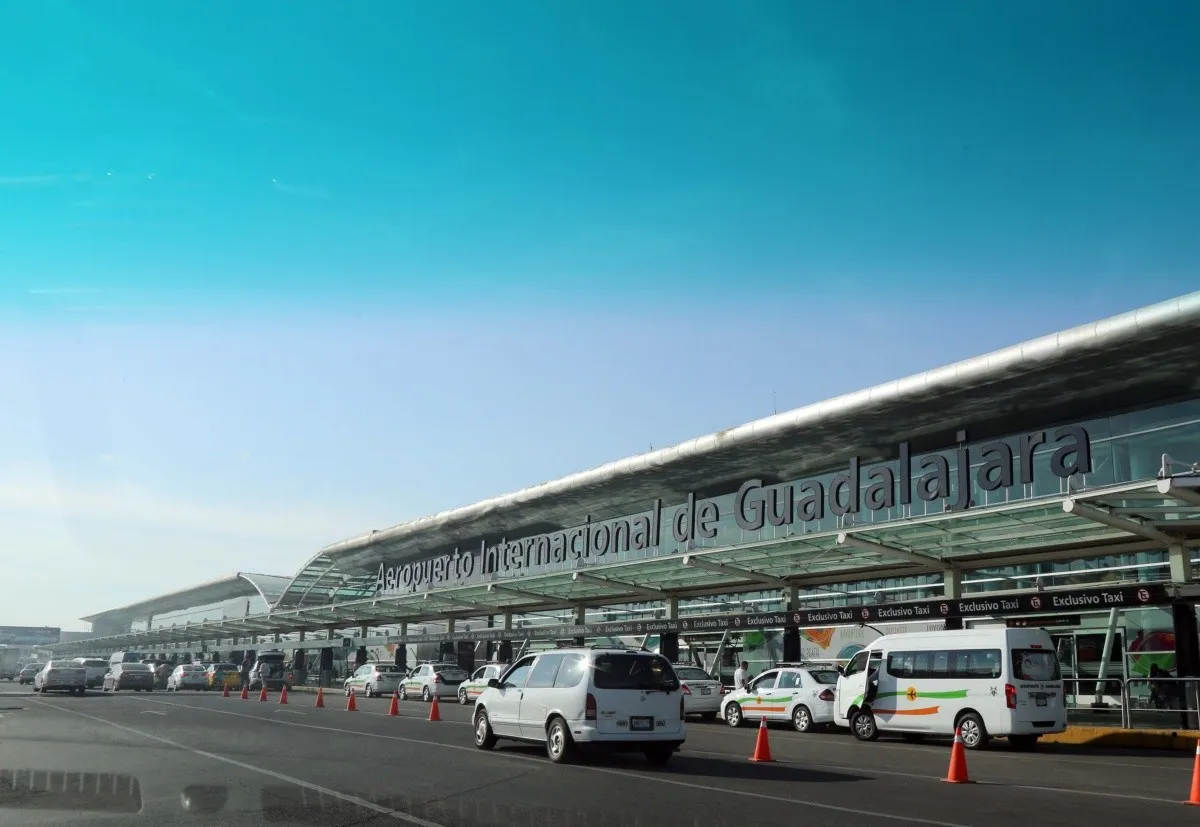
Guadalajara, Jal. The cargo terminal at Guadalajara International Airport will become an alternative for South American countries to export their products to the Asian continent.
This comes after the Chilean government asked China’s customs authority to add the port of Manzanillo and the Guadalajara air terminal as authorized and qualified ports for the clearance of goods originating in that country and bound for the Asian market, reported Federico Lepe Montoya, head of Strategic Planning at the Guadalajara World Trade Center (GWTC), the company that operates the cargo terminal at the city’s international airport.
“This is part of a project we have called the River Trade between Latin America and Asia, and China has been one of the main targets. We started this project back in 2013,” said Lepe Montoya, who also chairs the International Logistics commission of the Consejo de Cámaras Industriales de Jalisco (CCIJ).
Lepe Montoya explained that the project had not moved forward over the past 10 years because of the bilateral foreign trade agreements Chile and Peru had with China, which recognized only the port of Long Beach and Los Angeles airport, in California, as qualified to receive exports from South America.
Cargo hub
According to statistics from Grupo Aeroportuario del Pacífico (GAP), in 2019 the Guadalajara terminal handled 148,326 tons of cargo.
In 2020, despite the Covid-19 pandemic, air cargo rose to 153,034 tons; in 2021 it reached 184,883 tons, and 173,000 tons are expected to be handled by the close of 2022.
This positions the Guadalajara airport’s cargo terminal as the most important cargo hub in the country, Federico Lepe noted.
“If the sea-air logistics project is consolidated, we could go above 220,000 tons,” said the commission’s chairman.
Currently, 50% of the cargo is bound for Asia, 25% goes to Europe, 22% to North America and 5% to South America.
“We are in an ideal location; we serve the needs of Mexico’s Central-Western region because 36% of agricultural production is located here. From an import standpoint, our high-tech ecosystem continues to require a high level of supply from Asia,” he said.
Source: El Economista


