




China Presses Ahead with Its ‘Zero-COVID’ Policy Despite Frustration Among Shanghai Residents

The “zero covid” strategy calls for locking down neighborhoods or cities after the appearance of covid cases, quarantine for those who test positive, even if asymptomatic, and mass testing
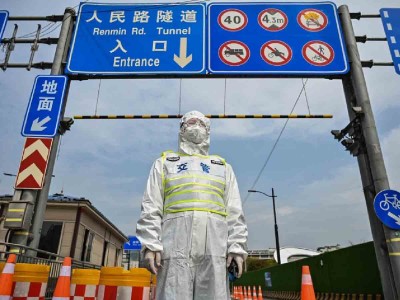
China declared this Friday that it will press ahead with its “zero covid” strategy despite the growing frustration of Shanghai residents, locked down since early April, who are protesting the government’s health policy by banging pots and pans from their windows.
The Asian giant is currently facing its worst epidemic outbreak since the spring of 2020. In the last 24 hours, the Ministry of Health registered more than 15,500 new cases of covid-19.
Our country is very populous, with regional imbalances in terms of development and a lack of medical resources. If we relax [the measures] and let the virus spread, many people will become infected,” he added.
The “zero covid” strategy has helped limit the number of coronavirus deaths, which officially stands at fewer than 5,000.
But the long lockdowns are weighing on the economy and on the population’s morale.
– Logistical challenge and pot-banging protests –
In Shanghai, the hardest-hit city, residents complain of not having enough fresh vegetables or meat.
On Thursday night, videos shared on social media, which were quickly censored, showed residents protesting with pots and pans from their windows and demanding “supplies”.
A Shanghai resident told AFP, on condition of anonymity for fear of possible reprisals, that she had seen this kind of footage online. After hearing the clamor outside, she joined the pot-banging. “I saw many videos like this, sent by people living in different neighborhoods,” she said.
The censorship of these images is fueling the population’s discontent.
But the lockdown also poses an enormous logistical challenge: supplying 25 million people despite the shortage of delivery personnel.
Another problem mentioned by Liang Wannian, head of the health ministry’s covid expert team, is the insufficient vaccination rate among the elderly in China.
This policy will also penalize the tourism sector during the May 1 holidays, which begin this Saturday and last five days. The Ministry of Transport forecasts a 62% drop in travel compared with 2021.
For the president of the European Union Chamber of Commerce in China, Joerg Wuttke, the country’s leaders are guided solely by the “zero covid” policy and “do not care about the economy in the short term”.
According to Wuttke, this health policy will continue until the 20th Congress of the Chinese Communist Party at the end of 2022, when President Xi Jinping is expected to secure a third term at the head of the regime.
He cannot change the discourse (on covid) so close to the goal,” he says.
Source: Excelsior


